 Image 1 of 3
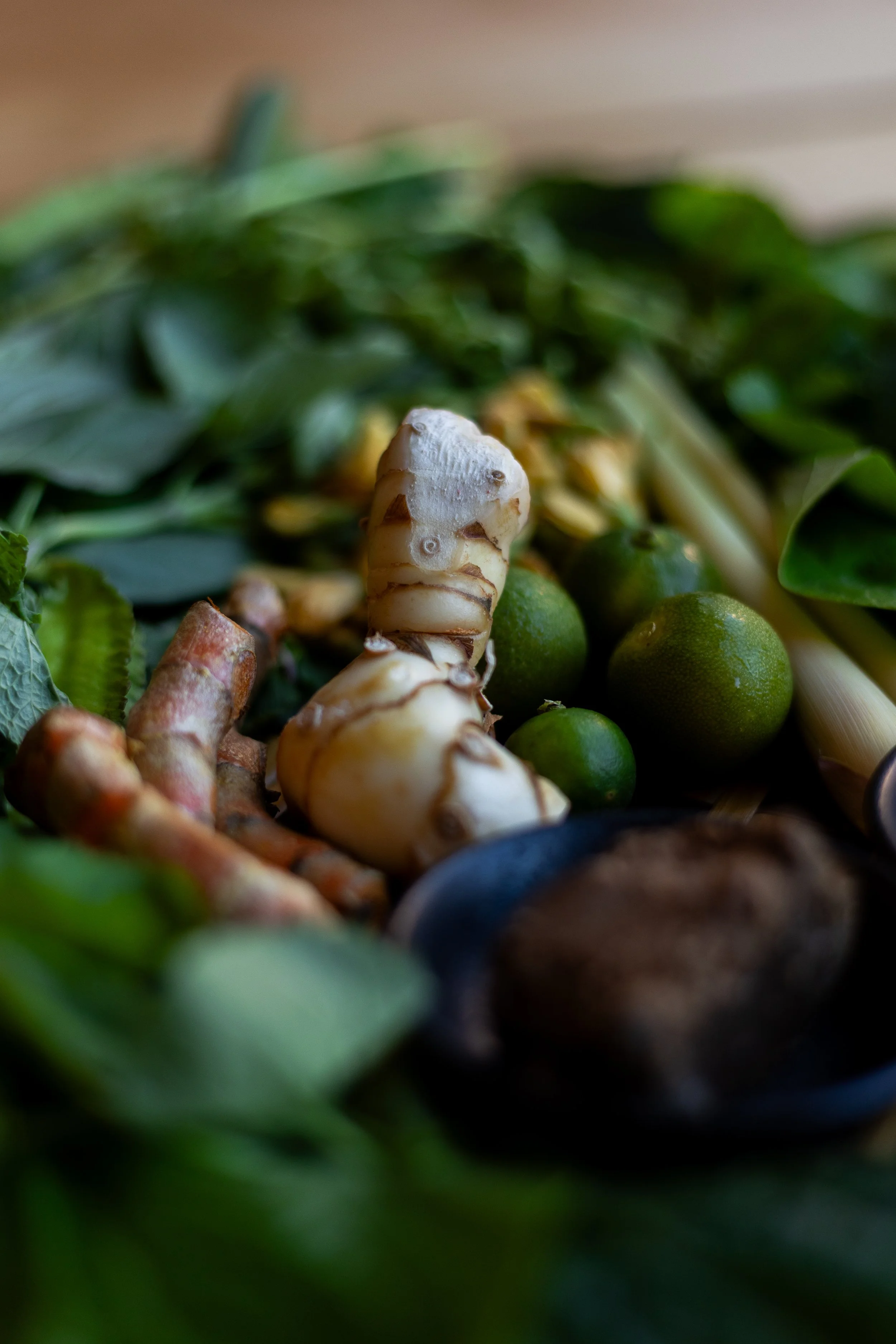 Image 2 of 3
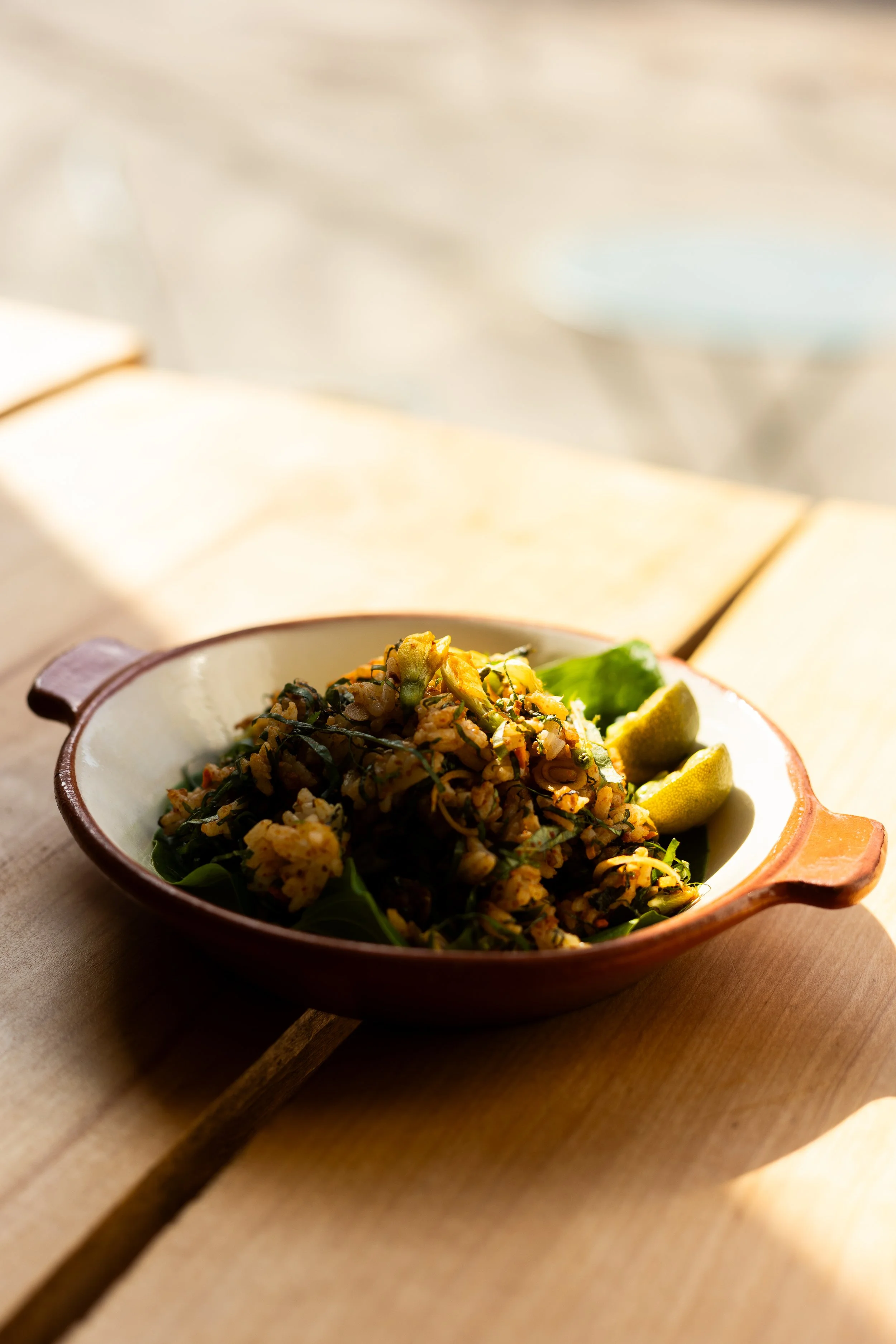 Image 3 of 3
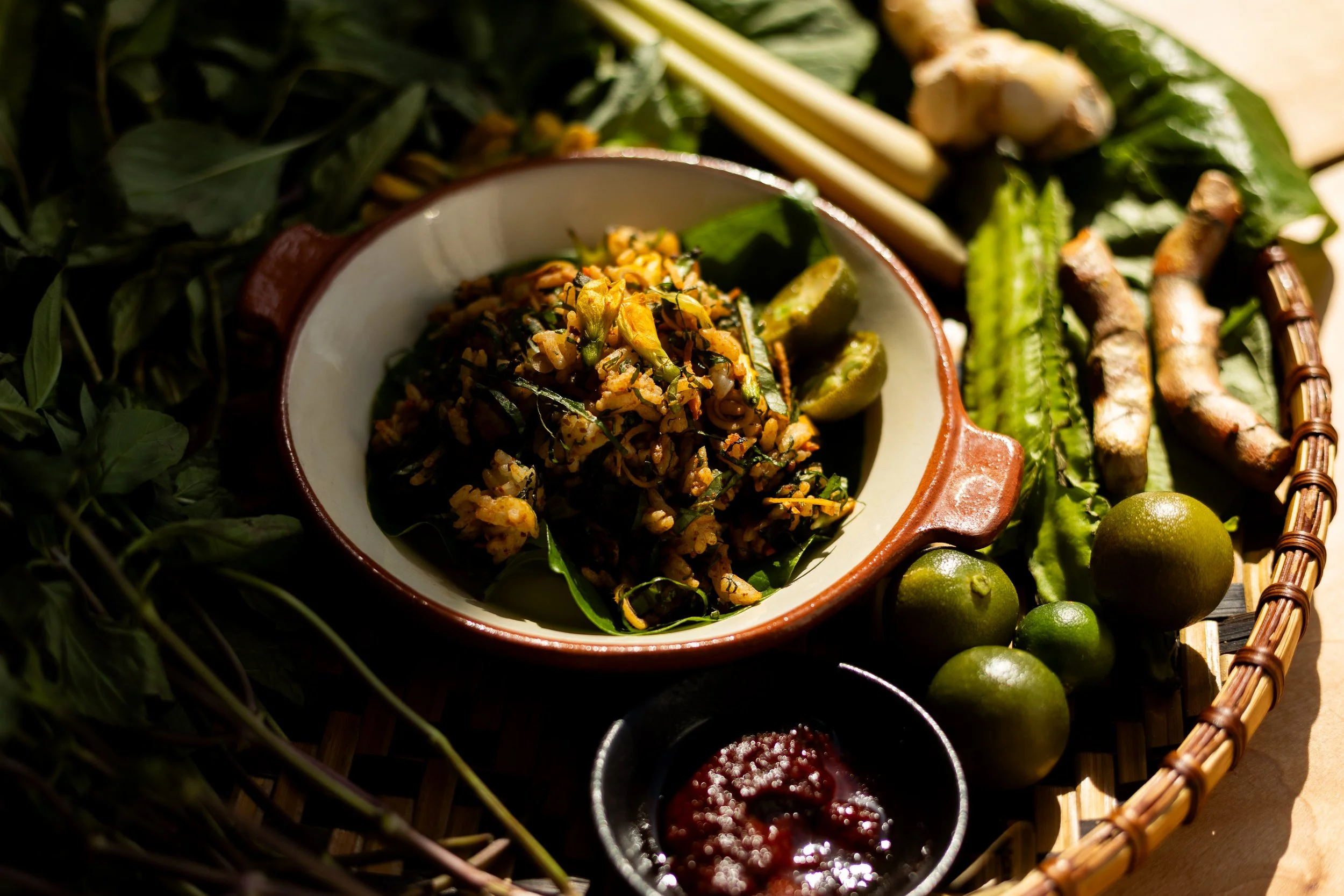
Nasi Ulam(herb rice) is more than a rice dish it is a conversation between people, plants, landscapes, and memory. Across Malaysia and the wider Malay world, generations have gathered fresh herbs, edible leaves, and aromatic ingredients to create this vibrant dish, reflecting local biodiversity, seasonal abundance, and cultural traditions.
In this hands-on workshop, participants will explore the history and cultural significance of Nasi Ulam while learning to identify, prepare, and combine a variety of traditional herbs and aromatics. Through cooking, tasting, and storytelling, we will examine how ingredients communicate knowledge about place, identity, and community.
Participants will:
Discover the origins and cultural significance of Nasi Ulam
Learn about traditional Southeast Asian culinary herbs and their uses
Practice techniques for preparing and combining fresh herbs
Prepare and taste an authentic Nasi Ulam
Explore connections between food heritage, biodiversity, and local knowledge
Suitable for culinary students, food professionals, and anyone interested in Southeast Asian food culture.
Nasi Ulam(herb rice) is more than a rice dish it is a conversation between people, plants, landscapes, and memory. Across Malaysia and the wider Malay world, generations have gathered fresh herbs, edible leaves, and aromatic ingredients to create this vibrant dish, reflecting local biodiversity, seasonal abundance, and cultural traditions.
In this hands-on workshop, participants will explore the history and cultural significance of Nasi Ulam while learning to identify, prepare, and combine a variety of traditional herbs and aromatics. Through cooking, tasting, and storytelling, we will examine how ingredients communicate knowledge about place, identity, and community.
Participants will:
Discover the origins and cultural significance of Nasi Ulam
Learn about traditional Southeast Asian culinary herbs and their uses
Practice techniques for preparing and combining fresh herbs
Prepare and taste an authentic Nasi Ulam
Explore connections between food heritage, biodiversity, and local knowledge
Suitable for culinary students, food professionals, and anyone interested in Southeast Asian food culture.
On June 6th, we invite you to step into the forest and experience food in a different way — not from a supermarket shelf, but directly from the land.
This workshop is a collaboration between Chef Jouni Toivanen and Malesian Keittiö Klubi, bringing together Nordic wild ingredients and Southeast Asian food traditions.
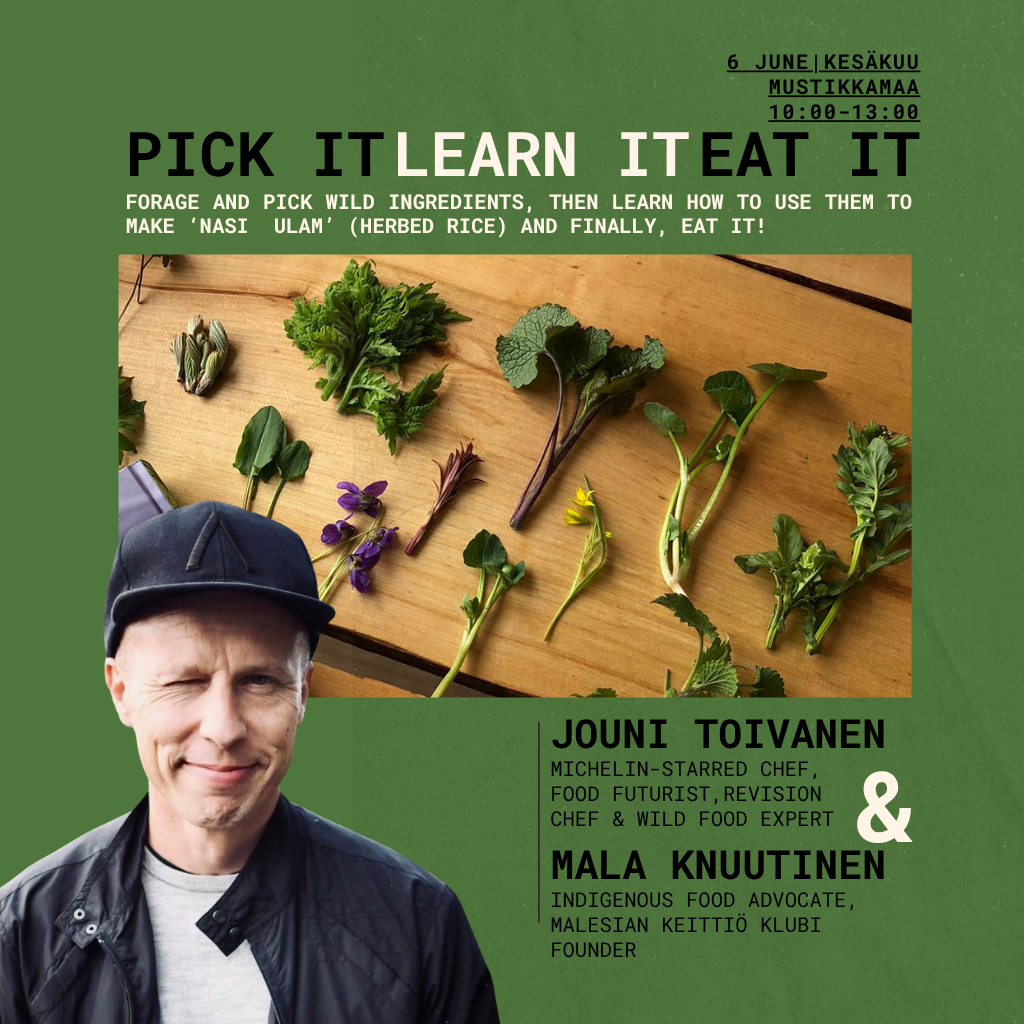
BIODIVERSITY AND TRADITION IN A BOWL OF NASI ULAM (HERB RICE)
Nasi Ulam(herb rice) is more than a rice dish it is a conversation between people, plants, landscapes, and memory. Across Malaysia and the wider Malay world, generations have gathered fresh herbs, edible leaves, and aromatic ingredients to create this vibrant dish, reflecting local biodiversity, seasonal abundance, and cultural traditions.
In this hands-on workshop, participants will explore the history and cultural significance of Nasi Ulam while learning to identify, prepare, and combine a variety of traditional herbs and aromatics. Through cooking, tasting, and storytelling, we will examine how ingredients communicate knowledge about place, identity, and community.
Participants will:
Discover the origins and cultural significance of Nasi Ulam
Learn about traditional Southeast Asian culinary herbs and their uses
Practice techniques for preparing and combining fresh herbs
Prepare and taste an authentic Nasi Ulam
Explore connections between food heritage, biodiversity, and local knowledge
Suitable for culinary students, food professionals, and anyone interested in Southeast Asian food culture.